How to practice sustainable agriculture
in college and still have time to study.
Showing posts with label Get the Facts. Show all posts

Thursday, June 5, 2014

A New Direction

The New Direction of Veggie Hoo



As you can see, I changed the subtitle of my blog from "how to be a healthy vegetarian in college and still have time to study" to "how to practice sustainable agriculture in college and still have time to study". This year, the word BALANCE has taken on a new meaning. Balancing school and friends, balancing exercising and sleeping, balancing relationships, balancing vegetables and carbohydrates, balancing my academics and extracurriculars. To balance is to give equal distribution.

For example, a place where I experienced balance and change was in my diet. I joined a crossfit class during the spring semester and as a result of continuous exercising early in the day, I was always hungry. I had stopped eating plant protein sources and was eating only vegetables and carbohydrates. During that time, I went to a healthy eating seminar at UVA and the speaker emphasized having a balanced diet. She said that 70% of the time she subscribed to a vegetarian diet, and 30% of the time she ate meat. The key to eating meat she said, "is that you have to be very stringent and cautious about where it's from and how the animals have been treated". At a farm that I was shadowing at, a farmer stated that stressed out chickens create eggs with more cholesterol so couldn't the same principle apply to any animals? Because of the eating seminar, I decided to start incorporating meat into my diet (very slowly) in February and my first meat source was wild sockeye salmon from Trader Joe's. I am not much of a fish fan so buying salmon was a bold move for me and incorporating it as my first animal protein source in lieu of a plant source was even more surprising! I marinated the salmon in lemon juice, garlic, salt, and pepper, wrapped it up in aluminum foil, and baked it in the oven and voila! Flaky delicious fish. 


In the meantime, I joined the gardening club at UVA and also went to the community garden events. My first flower ever planted at UVA was a calendula. We cut open 20 oz. soda bottles, put 1/2 cup of potting mix inside, and planted our seeds in them. I placed the flower in my apartment windowsill and the flower bloomed beautifully! And recently, I just learned that calendula's can be used for medicinal purposes: if you make a lotion or paste, it can be applied to your skin to reduce pain and swelling. 


This past year, I've realized my focus shifting. Here is my train of thought in 2 years and hopefully it can serve to explain the evolution of my blog: 


Wednesday, September 4, 2013

3 Essential Appliances you must buy for Cooking in College


3 Essential Appliances you must buy for 

Cooking in College

1)    Slow Cooker: No complaints about being too expensive because a slow cooker starts at $17 online at Walmart.com! A slow cooker is inexpensive, efficient, and requires little/no effort in cooking! They are designed to be left alone which is perfect for a college student because we typically leave for class in the morning and return about 6 hours later.. starving! Not only will you have food in your house, you’ll have a lot of it. So, freeze the extra soup or casserole you made and safe it for a later time!  

2)    Electric Kettle: The electric kettle is also just as amazing and is $23 at Walmart. Like a slow cooker, an electric kettle does not need a watchful eye in order to boil water. Forget worrying about burning your house down when you no longer need to use your stove to heat water. This appliance is super handy because you use boiling water for almost everything: making tea, preparing pasta, dissolving broth, adding to oatmeal. Super handy!


3)    Microwave: This might be too obvious for me to state, but I think that college kids forget the range of activities that a microwave can assist you with! The least expensive microwave at Walmart is only $15.75. What a steal! If you have a microwave, you don’t need an oven to cook. Don’t believe me? Here’s my proof of what I’ve made in the microwave: steamed vegetables, chocolate cake, popcorn, boiling water, cheese bread, toast. Plus, you can always nuke a frozen dinner if you are in a time crunch. Peta's Vegan College Cookbook has loads of recipes whose highest degree of cooking includes using a microwave.


I hope this list has helped you out. I can personally say that I use my slow cooker 3 times a week, my electric kettle 14 days a week, and the microwave 7 days a week. And remember that I have roommates who also use these appliances, so regardless of the investment you make, know that you’ll get a lot of use out of these.

Note: If you are going to be cooking frequently, weigh the quality of the appliances versus the quantity (price) of it. You might pay a little more for an appliance that will last longer!

Go ‘Hoos!


Tuesday, June 18, 2013

Top 8 Alternative Milks

Summary of Top 8 Non-Dairy Milks


Whether you are a vegan or not, alternative milks can be healthier for you than diary milk because of various vitamins and nutrients in them. When in college, I aim for alternative milk that is healthy, tastes good, versatile, and inexpensive. Also, because I’m an engineer, I like charts and tables, so I created a handy chart to condense the research into one nifty little page! Below the chart are links to videos showing how to make your own alternative milks at home!
Making your own non-dairy milk is preferred because it’s less expensive and healthier, since you control what goes in the milk. Also, there are not any preservatives nor added mystery elements!

Name
Origin
Health benefit
Texture and Color
Price
Soy Milk
Soy beans
High protein, high iron. Lower in calcium than dairy milk so it comes fortified
Cream, beige color and milk-like texture
$3.99- $4.29 for 1 quart
Almond Milk
Almonds
High in protein, calcium, and vitamin E.
Creamy, beige color and nutty flavor.
$3.00-$5.00
Rice Milk
Rice
Least amount of fat. Low protein, calcium, and very starchy.
Very light, white color.
$2.70 - $6.00
Oat Milk
Oatmeal
High in fiber and protein but is very starchy.
Creamy, beige. Tastes like oatmeal.
$3.00-$6.00
Hemp Milk
Hemp
Good source of Omega 3 fats
Creamy, white color. Similar to dairy milk taste.
$4.00-$6.00
Cashew Milk
Cashews
Provides copper, calcium, magnesium, and protein.
Similar texture to almond milk, nutty taste.
(Typically made at home, but can be found at certain natural stores)
$10.00 for 32 oz.
Coconut Milk
Coconut
Low carbohydrate content and lauric acid (good for immune system). But, high in saturated fat.
Very creamy, coconut flavor
$2.00 - $5.00


Resources:
Click this video for a great way to make your own soy milk at home!
Click this video to learn how to make almond milk at home!
Click this video to make your own rice milk!
Click this video to make your own oat milk!
This video shows you how to make your own hemp milk!
Click this video to make your own cashew milk!
This video shows you how to make coconut milk at home!


Monday, June 17, 2013

Fish Friends and Recipe

More Information on Fish and a Recipe that Reduces Fish Farming!


The Psychology of Fish

The college library during final exams week is a sight to see! You can go in during any time of day and see tired and over-stimulated college kids chugging energy drinks and ordering pizzas at 1 a.m. In one specific library, there is a huge fish tank sitting in the middle and a sign that says “take a break!”. Then, in the engineering library, there are stations for playing with Lego's and coloring with crayons. Interesting, I know!


So, this upcoming year, I am getting a fish for my apartment. Here’s why:
1.       Fish are not messy and do not have a litter box nor do they poop around the house!
2.       Fish do not bark or hiss at random shadows outside your window.
3.       Fish do not shed (in the air).
4.       Fish do not scratch your furniture, eat your shoes, or pee on the couch.
5.       One fish does not cost above $20 (at least not the ones at the local pet store).
6.       Studies have shown that aquariums reduce blood pressure and stress levels. Even watching a video of fish has therapeutic effects. Do you ever wonder why there are fish tanks in Finding Nemo? It’s because they are supposed to be calming!
7.       Alzheimer's patients experienced less physically aggressive behaviors and needed less supplements for memory loss.
8.       “Fish are friends, not food!”… Fish are companions!


Sources:

Fish Farming

This brings me to my latest point, which is about fish farming. According to Farm Sanctuary, psychologically, because we do not associate fish with screaming, we assume that they do not feel pain. Research also shows that fish exhibit intelligent behavior, like interactions with other fish and learning capabilities. Factory farming is an issue that not many people think about. Granted, fish is healthy for you, but not fish that has been fed hormones, antibiotics, and has high levels of stress. (Factory farming does not only apply to land animals). To learn more, read a pamphlet on Food & Water Watch, watch Overfishing: Reeling Them In or End of the Line.

Recipe


In case you are still craving seafood, check out this recipe that I just made. It’s delicious, low fat, and does not harm beautiful creatures!


Tuesday, June 4, 2013

Edible and Medicinal Plants


Long before writing began, plants have been serving medicinal purposes in both Egyptian and Chinese ways of life. In the early 1800's, chemists began to extract plant ingredients as healing drugs and eventually, man-made drugs replaced plant based ones.


As a vegan, I find this very interesting because it seems like technology took us away from a vegan form of healing. In the past 20 years, herbal remedies have been increasing as a result of public dissatisfaction with prescription medications. 


This past weekend, I went on an Edible and Medicinal Plant Walk that was sponsored by the Rivanna Conservation Society. I’ve been to a sugar-addict class, a vegetarian cooking class, and even had a nutritionist, but never have I encountered herbal remedies. In the end, the walk was a lot of fun and very informative. The cool part of it all is that you can find these plants in your backyard! Here are my notes:


Flower
How to use and benefits
Picture
Plantain
Take leaf, chew up and can place on bee sting, mosquito bites, chiggers. Antiseptic and healing.
Cinquefoil
Both the roots and the herb are antispasmodic (controls muscle spasms), astringent (draws tissue together) and febrifuge (reduces fever). Young leaves – raw are a useful addition to salads
Blackberry
Fruit edible. Leaves and roots are astringent. Can be used on burns and poison ivy.
gcdn.com/www.slashfood.com/media/2008/08/blackberries--leaves-425.jpg
JapaneseHoney Suckle
Flowers are used for making honeys and syrups. Leaves can be toxic but hard to absorb by human body. The stems and flower buds are alterative, antibacterial, anti-inflammatory. Helps with sore throat
(Stag’s Horn) Sumac
Fruit, when cooked can be made into pies and juice. Very sour. Bark is antisepctic, astringent, tonic (refresher)
Pine Tree
Edible inner bark. Needles are good source of Vitamin C, just don’t swallow it. Tea made of needles can help with lung congestion.
Yarrow
particularly valuable for treating wounds, stopping the flow of blood, treating colds, fevers, kidney diseases, menstrual pain.  Yarrow, elder and peppermint are a classic herbal tea combination used to treat colds.
Ox-eye Daisy
Edible in salads. The plant has been employed successfully in the treatment of whooping cough, asthma and nervous excitability
Red Clover
Can be put into salad. A delicate sweet herb tea is made from the fresh or dried flowers. The dried leaves impart a vanilla flavor to cakes.
Poke Weed
Mature leaves are poisonous. Leaves must be cooked before eaten. Berry’s are red and used as dye. Used in the treatment of diseases related to a compromised immune system
Lemon Balm
Leaves can be eaten raw or cooked. Are used in flavoring alcoholic beverages with a lemony flavor. Called “gladdening herb”
Stinging Nettle
Only use young leaves. they are a very nutritious food that is easily digested and is high in minerals (especially iron) and vitamins . Flax-like fiber obtained from stem.
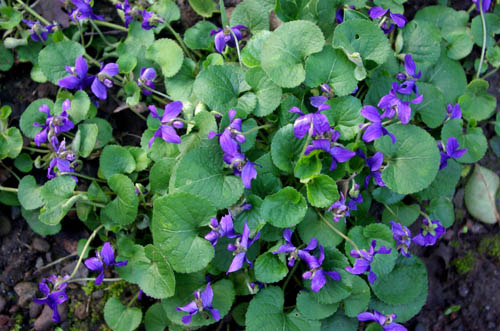
Wild Violet
Edible. Assists  
a
other herbs in performing their action. Helps with varicose veins. caution is advised, the yellow flowers of this species can make you sick.
Mimosa
Antidepressant inner bark. Yellow dye obtained from flowers. Pollen is very soluble in water.
Redbud
Abundant purple flowers in late spring. Flowers have nice refreshing acid taste, the flowers are rich in vitamin C and make a pleasant addition to salads
Hawthorn
Fruit is normally used for making jams and preserves. Medicinal heart tonic. Tree has distinctive spikes.
Day Lilies
An asparagus or celery substitute. An excellent sweet tasting vegetable. Can be used as laxative.
Autumn Olive
Fruit raw or cooked are juicy and pleasantly acid, they are tasty raw and can also be made into jams, preserves. Stimulant in treatment of coughs.
Greenbrier
Root can be dried and ground into a powder. Can eat tendrils. Used in treatment of urinary complaints.
Oak tree
Seed = acorns are edible. Used as antiseptic and astringent properties.
Dandelion
A pleasant tea is made from the flowers. Everything is edible except stem. Nutritious.
http:/
/www.wildmanstevebrill.com/JPEG'S/Plant%20Web%20Images/DandelionSeedhead.jpg
Wild Lettuce
Can eat leaves as salad. Sap can be used as sedative.
Wood Sorrel
Resembles a clover but has heart-like leaves. Lemony taste. Can be used in soups and salads. Leaves can relieve pain, rich in Vitamin C.
Yucca
Looks like a giant asparagus. “food, rope, fire, and soap”. Stem cooked and used like asparagus.
Elderberry
Purple berries. Antiviral in vodka. Can make elderberry syrup against cold and congestion. Leaves = poisonous.
Passion Flower
Fruit can be eaten raw or cooked. Very fragrant. Increases sleep latency so you will stay asleep.